
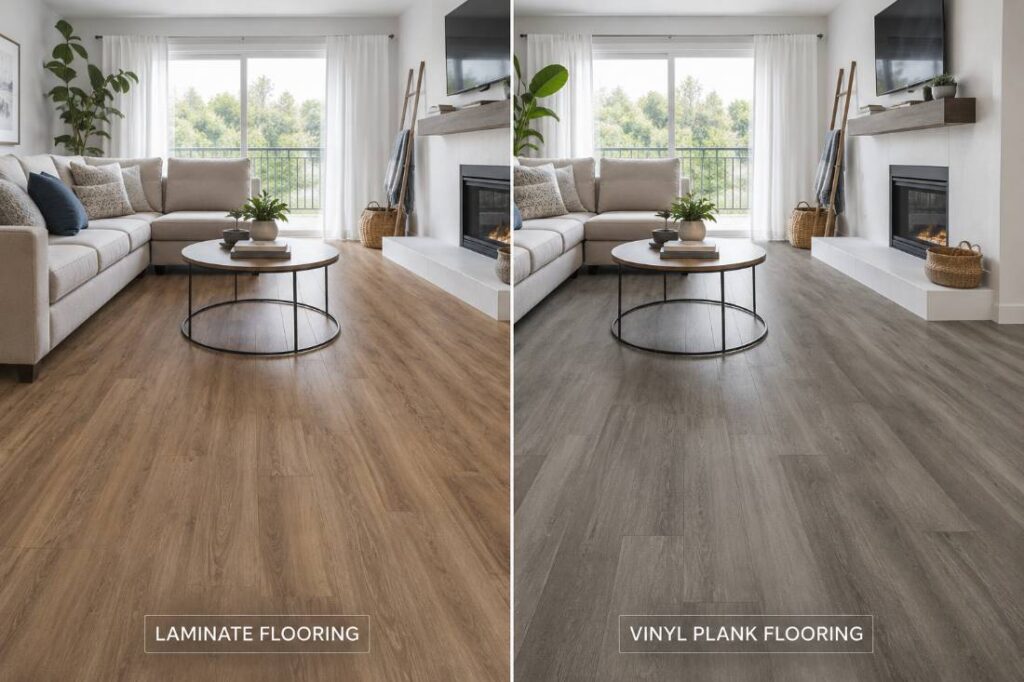
Choosing new flooring means weighing more than just looks. Laminate and vinyl both offer durability and style at a reasonable price point. Each material performs differently depending on where you install it. Understanding those differences helps you avoid costly mistakes down the road.
What Is Laminate Flooring
Laminate flooring uses a high-density fiberboard core topped with a printed image layer. A clear wear layer sits on top to resist scratches and fading. It clicks together in a floating installation, without glue or nails.
Pros of Laminate Flooring
Laminate offers realistic wood and stone visuals at a fraction of hardwood pricing. It resists scratches well, making it a strong choice for households with pets. Installation moves quickly since most laminate uses a click-lock system. It also holds up better than hardwood under direct sunlight exposure.
Cons of Laminate Flooring
The fiberboard core absorbs moisture if water sits on the surface too long. Swelling and warping can happen in humid or wet environments. Laminate can also feel and sound hollow underfoot compared to vinyl. Once damaged, individual planks are harder to spot-replace than vinyl.
What Is Vinyl Flooring
Vinyl flooring, often sold as luxury vinyl plank, uses a fully synthetic construction. A rigid core sits beneath a printed design layer and a protective wear layer. Because nothing in the makeup absorbs water, vinyl performs well in damp conditions. This construction gives it an edge for coastal homes dealing with humidity.
Pros of Vinyl Flooring
Vinyl handles moisture better than almost any other flooring type on the market. It feels softer and warmer underfoot than laminate or tile. Many products include an attached pad for sound dampening and cushioning. Vinyl also resists dents from dropped objects and heavy furniture.
Cons of Vinyl Flooring
Vinyl can look slightly less authentic than premium laminate in certain lighting. Lower-end products may show wear faster if the wear layer runs thin. Vinyl also softens under intense, prolonged heat exposure near windows or fireplaces. Full replacement is sometimes required rather than repairing a single damaged plank.
Which Looks Nicer
This comes down to personal preference and product quality more than material type. High-end laminate often replicates wood grain texture with impressive realism. Premium vinyl plank does the same, with a softer surface sheen. Budget versions of either material can look noticeably flat or repetitive. Viewing samples in your own lighting is the best way to judge appearance.
Which Has Better Water Resistance
Vinyl wins this comparison by a wide margin. Its synthetic core does not absorb water the way laminate’s wood-based core does. Standing water on laminate can cause swelling within hours if left unaddressed. Vinyl tolerates spills, splashes, and humidity without structural damage. This makes vinyl the stronger option for bathrooms, kitchens, and basements.
Which Has Better Wear Resistance
Wear resistance depends heavily on the thickness of the protective top layer. Laminate uses an AC rating system, ranging from AC1 for light use to AC5 for heavy commercial traffic. Most residential laminate falls in the AC3 to AC4 range. Vinyl measures its protective layer in mils, with residential products typically running 8 to 12 mils.
Higher-traffic vinyl products push into the 20 mil range for added protection. A thicker wear layer on either material means better resistance to scratches and dents. Homes with kids or large pets should prioritize thicker wear layers regardless of material choice.
Where to Install Laminate
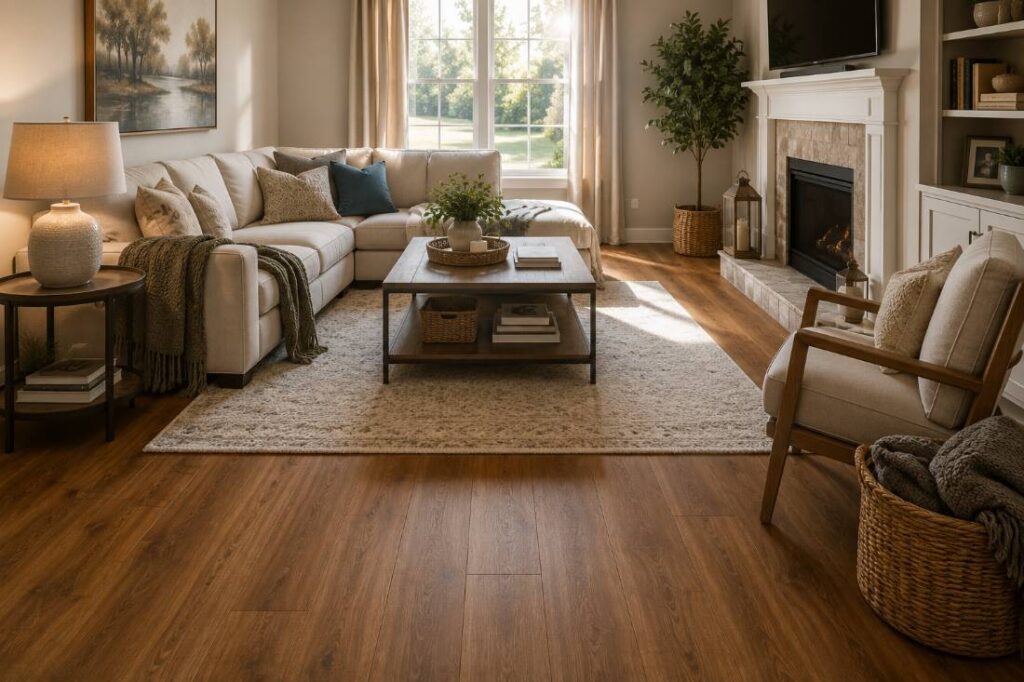
Laminate performs best in living rooms, bedrooms, hallways, and home offices. These spaces see regular foot traffic without frequent moisture exposure.
Laminate is a good fit for older Ocean County homes needing a budget-friendly refresh. Avoid laminate in bathrooms, laundry rooms, or below-grade basements prone to dampness.
Where to Install Vinyl
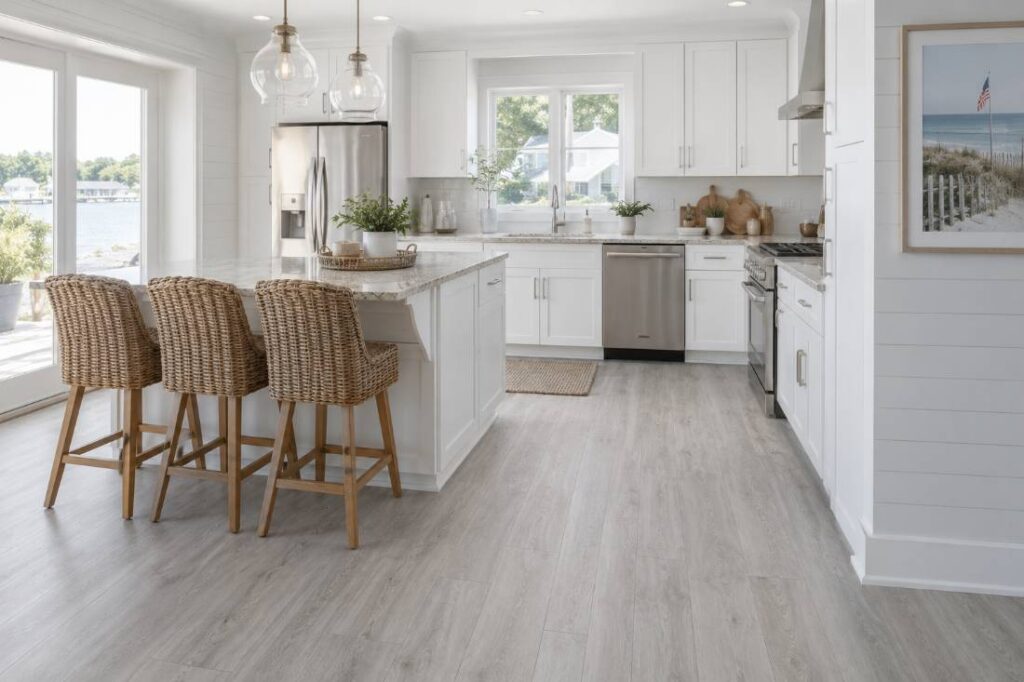
Vinyl works well in kitchens, bathrooms, mudrooms, and finished basements. Its water resistance makes it a smart choice for raised foundation homes near the water.
Monmouth County shore properties dealing with humidity benefit from vinyl’s stability. Vinyl also suits rental and investment properties that need durable, low-maintenance flooring between tenants.
Underlayment Recommendations
Laminate flooring pairs best with a high-density foam underlayment. This allows the planks to expand and contract with temperature changes. In moisture-prone rooms, choose a foam underlayment with a built-in vapor barrier. Basement installations over concrete need this vapor barrier without exception.
Vinyl plank flooring generally needs a thinner, firmer underlayment than laminate. Many mid-range and premium vinyl products already include an attached pad. If your vinyl lacks attached padding, cork underlayment works well and resists moisture damage. Check manufacturer guidelines first, since some vinyl warranties restrict certain underlayment types. Concrete subfloors still require a separate moisture barrier even with attached-pad vinyl.
Making the Right Choice for Your Home
Laminate and vinyl each bring real advantages to different rooms and lifestyles. Vinyl handles moisture and heavy use with more confidence. Laminate delivers a warmer, more traditional wood look at a lower cost. The right material often depends on the specific room and household needs.
GYB Construction helps homeowners weigh these options based on their home’s layout and daily use. Our flooring installation process includes guidance on material selection, underlayment, and long-term maintenance. Contact us for a free consultation to discuss the best flooring fit for your space.